
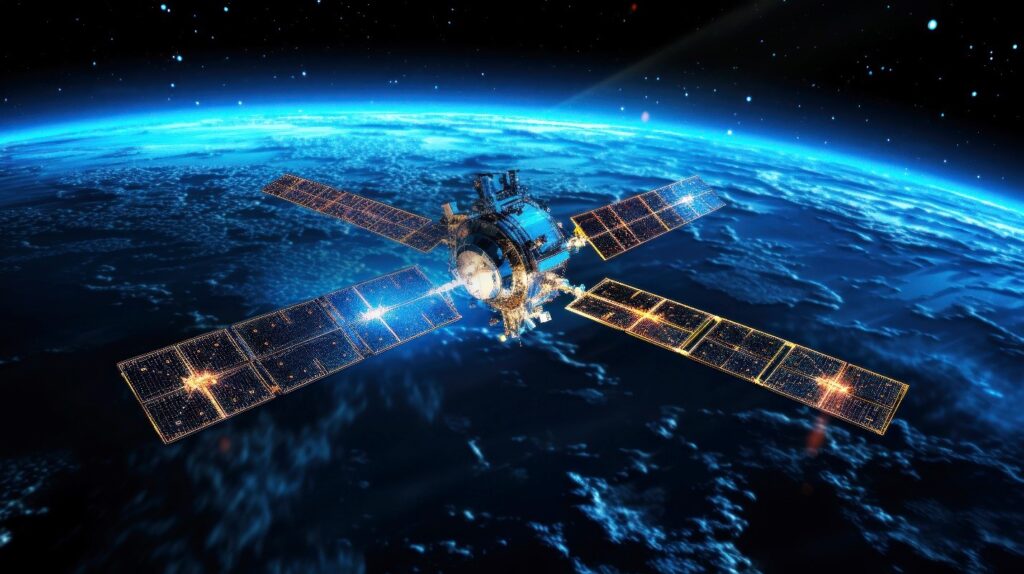
Thermal vacuum (TVAC) testing is a critical environmental qualification process that verifies a satellite’s ability to operate reliably under the extreme temperature fluctuations and near-zero pressure conditions of space. As satellite networks expand to support global connectivity, thermal vacuum testing plays a critical role in ensuring mission success across every orbital environment.
Why Thermal Vacuum Testing Is Essential for Satellite Missions
The satellite communications market is experiencing one of the fastest periods of growth in its history. To accommodate global demand for cellular connectivity and seamless digital communication, satellites have become the essential infrastructure linking terrestrial networks with space-based systems. The expansion of Low Earth Orbit (LEO) constellations—led by companies such as Starlink, OneWeb, and Amazon’s Project Leo/Kuiper—has accelerated this shift. These satellites function as orbiting cell towers, bringing high-speed service to remote regions, oceans, rural communities, and developing markets where fiber and ground networks cannot easily reach.
Telecommunications providers are increasingly integrating these satellite networks into their infrastructure as they prepare for the next generation of connectivity, including 5G, 6G, and advanced Internet-of-Things applications. Each satellite must demonstrate that it can operate through thermal extremes and survive years of thermal stress and the vacuum of space—conditions that are impossible to replicate on Earth without specialized testing equipment.
Thermal vacuum testing for satellites verifies that a satellite or spacecraft can withstand extreme temperature shifts, maintain stable thermal performance, and operate reliably in a near-perfect vacuum. Without this qualification step, communications satellites cannot be considered flight-ready.
Satellite Orbits and Their Thermal Testing Requirements
The satellite market spans three primary orbital regimes, each serving different mission requirements:
- LEO (Low Earth Orbit): Closest to Earth and providing the low latency needed for broadband networks and real-time data services.
- MEO (Medium Earth Orbit): Offering a balance between coverage and latency, commonly used for navigation systems such as GPS.
- GEO (Geostationary Orbit): Orbiting much higher and remaining fixed over a specific point on Earth, making it ideal for broadcasting, wide-area telecommunications, and weather monitoring.
Together, these orbits create a global communications architecture that supports everything from mobile phone service to military operations.
Satellite Size Classes and Environmental Testing Challenges
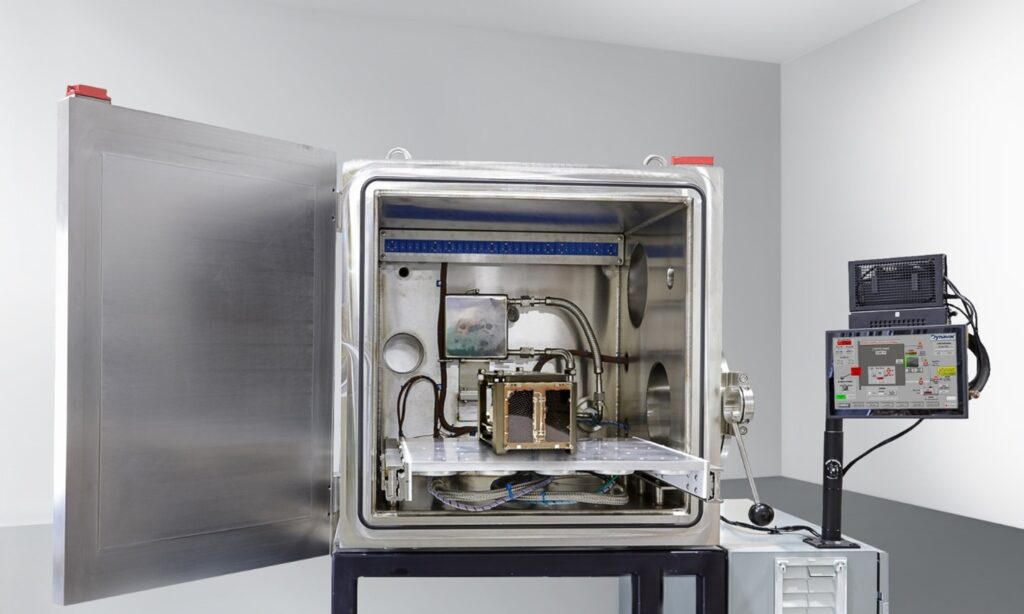
Satellites can also be categorized by size, a shift that has significantly influenced the pace of innovation across the industry. Large traditional satellites often weigh several tons and undergo extensive multi-year development cycles. In contrast, small satellites—sometimes referred to as smallsats—are designed to be more modular and cost-effective, allowing them to be produced and deployed more rapidly:
- Minisatellites: 100–500 kilograms
- Microsatellites: 10–100 kilograms
- Nanosatellites: 1–10 kilograms, including standardized CubeSats built from 10-centimeter cubic units.
Environmental Challenges Satellites Face in the Vacuum of Space
No matter their size or mission, all satellites share one requirement: they must undergo satellite thermal vacuum testing before leaving Earth. The challenges of space are universal. Temperatures can swing from blistering heat in direct sunlight to extreme cold in shadow. Without an atmosphere, heat transfer occurs only through radiation rather than convection or conduction. Materials can outgas and contaminate sensitive surfaces. Electronics can experience thermal stress that leads to fatigue, fracture, or degraded performance. Under these conditions, even minor design weaknesses can escalate into mission-threatening failures.
How Thermal Vacuum Chambers Simulate the Harsh Conditions of Space
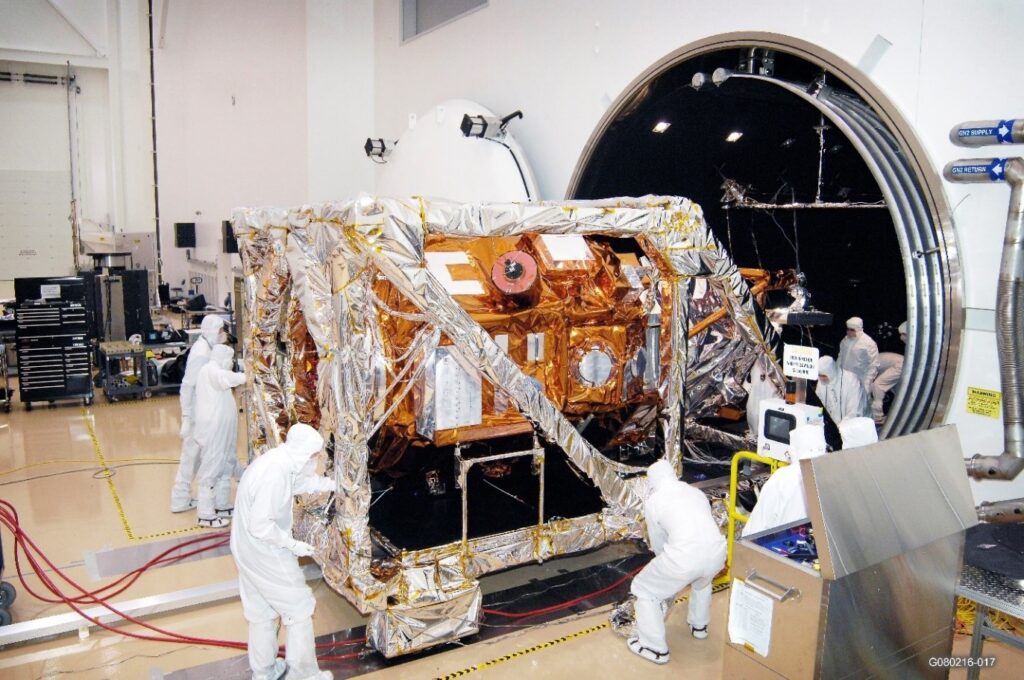
Thermal vacuum testing replicates these conditions as closely as possible using space simulation chambers designed to reproduce the extreme thermal and vacuum environment of orbit. Inside a thermal vacuum chamber (TVAC), a satellite is exposed to deep vacuum levels, extreme hot and cold temperature cycles, and extended soak periods that mirror orbital transitions. Engineers monitor how the spacecraft’s thermal control system behaves, how effectively components dissipate heat, and how stable the platform remains under demanding conditions.
Thermal Vacuum Testing for High-Power Satellite Communications Systems
Functional testing is often conducted during these phases to ensure that power systems, communication payloads, antennas, and processors all perform reliably under thermal and vacuum stress. For communication satellites in particular—especially those carrying high-power RF amplifiers and phased-array antennas—thermal performance is critical. These systems generate significant heat, and verifying their ability to manage it in a vacuum is essential to ensuring long-term mission reliability.
Dynavac Thermal Vacuum Chambers for Satellite Qualification Testing
Dynavac’s Thermal Vacuum Test Chambers are engineered specifically for this purpose. They reproduce the extreme thermal and vacuum environments of space with exceptional precision, enabling satellite manufacturers to qualify spacecraft to the industry’s most rigorous standards, including MIL-STD-810, ECSS, NASA guidelines, and GEVS specifications. These space simulation chambers simulate the harsh conditions of space, achieving temperatures from −180°C to +150°C and vacuum levels as low as 1 × 10⁻⁶ Torr. Sizes of the thermal vacuum chambers range from 1ft to 16ft and larger for the most complex spacecraft testing. By uncovering design flaws, thermal vulnerabilities, and material issues early in the development process, Dynavac helps ensure that every satellite launched is built for long-term reliability. As a leader in thermal vacuum chambers and space simulation chambers, Dynavac supports satellite manufacturers across commercial, civil, and defense space programs.
Supporting the Future of Global Connectivity Through Reliable TVAC Testing
As global telecommunications move further toward integrated terrestrial and space networks, the importance of thorough environmental testing continues to grow. The next generation of connectivity depends on satellites capable of operating continuously for years without maintenance. Small satellites, despite their lower cost, require the same level of testing discipline as large GEO platforms. Their rapid deployment cycles make early issue detection even more essential. TVAC testing provides assurance that these spacecraft will perform as intended once they enter orbit.
In an era where universal connectivity is no longer a luxury but a necessity, Dynavac plays a vital role in strengthening the communications infrastructure that connects people, devices, and industries around the world. By ensuring that each satellite is fully prepared for the challenges of space, Dynavac helps build the foundation for a more robust and resilient communications future—one orbit, one mission, one successful test at a time.